
I’ve lost track of how many nights I’ve spent staring at pixel-art remasters, trying to trace the line from blocky sprites to worlds that look almost real. Technology and digital art didn’t just meet — they collided, hard. What came out the other side is online entertainment that feels immersive in ways older mediums can’t touch. From chunky 8-bit sprites to photorealistic virtual worlds, game design became a genuine art form, one that shapes visual culture and storytelling far beyond the screen. Watching AI, virtual reality, and 3D modeling reshape creative expression changed how I think about what “entertainment” even means.
What Is Narrative Design and Why Does It Elevate Video Games to High Art?
Narrative design is the craft of stitching story directly into gameplay mechanics, environments, and the choices players make — not bolting a plot on top after the fact. Games like The Last of Us and Journey don’t just tell you a story. They hand you a role in it. You’re not watching from the sidelines.
This is where it gets interesting to me. That participatory approach is what turns games into something closer to high art, through what designers call “environmental storytelling” — lighting, architecture, the way objects sit in a room, all quietly filling in backstory without dialogue. Walk through the ruins in Horizon Zero Dawn and you’ll piece together the fall of a civilization from what’s scattered on the ground. It borrows straight from fine art, where composition and symbolism do the talking, but adds something painting never had: your own agency. The difference is you make meaning happen instead of just observing it.
How Environmental Storytelling Transforms Players into Co-Authors
Environmental storytelling hands you interpretive freedom. Nobody’s dictating the plot. You find a child’s toy next to a makeshift shelter in some survival game, and suddenly you’re building the emotional story yourself — maybe a family fleeing in a hurry, maybe a quiet moment of normal life before everything fell apart. That kind of interpretation sticks with you longer than a cutscene ever could. You own the story you dug up.
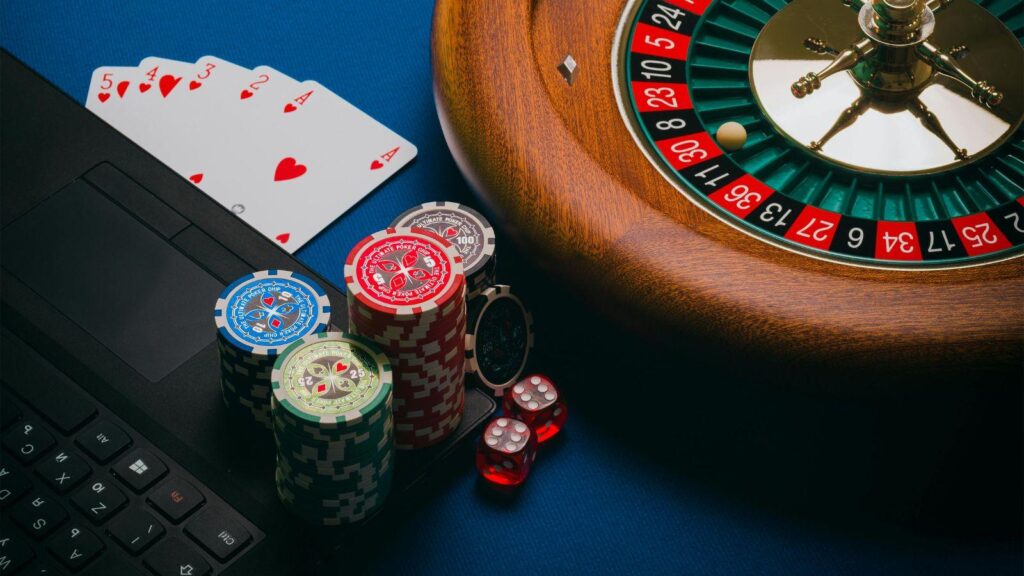
The Museum of Modern Art putting games like Minecraft in the same conversation as legitimate art isn’t just a nice headline — it validates what plenty of us already suspected. Procedural narrative generation pushes this further, letting worlds respond to player choices in real time, blending authored content with stuff that emerges on the fly. I’ve noticed similar principles showing up outside traditional gaming too. Platforms like Casino LuckyWave lean on sophisticated visual design and real-time engagement mechanics that pull users into carefully built digital experiences — proof that interactive entertainment isn’t confined to consoles and controllers anymore.
The Emotional Engine: How Modern Renderers and UI/UX Sculpt Interactive Digital Art
Modern engines — Unreal Engine 5, Unity — act as the canvas now. Artists render photorealistic environments in real time, and the whole thing reacts instantly to whatever the player does. These foundations let designers build worlds that feel alive: light shifts the way real light shifts, weather rolls in organically, characters flicker with tiny emotional microexpressions you’d swear were human.
The real artistry shows up in UI/UX design — that’s where technical horsepower turns into an actual feeling. Journey strips its interface down to almost nothing, letting the visuals dominate and pulling you into something close to a meditative state. Compare that to League of Legends, where layered HUD elements throw complex strategic information at you through color and spatial hierarchy alone. Different games, same truth: interface design is visual art too.
Beyond the Visuals: Why Player Agency Is the Ultimate Artistic Medium
Player agency — the meaningful choices you’re actually given — separates interactive digital art from everything that came before. Decide whether to save or sacrifice a character in a branching narrative, and you’re not just taking in art; you’re helping make it. That’s the claim that finally got gaming taken seriously alongside film and literature.
Underneath all that “freedom” sits a pile of quiet engineering: AI systems governing how non-player characters behave, physics engines simulating objects that bump and break the way they should, memory systems tracking hundreds of decisions to shape where the story lands. None of it looks artistic on its own. But together, these invisible systems create what feels like open possibility while being carefully orchestrated — a tightly built space dressed up as freedom. It’s engineered spontaneity, and it works.
How Are Virtual Reality and AI Algorithms Rewriting the Rules of Visual Culture?
Virtual reality — Meta Quest headsets, AR apps — flipped how audiences experience digital art. You’re not observing anymore. You’re standing inside it. VR installations let you walk through paintings, push sculptural elements around in three-dimensional space, and feel scale in a way flat media simply can’t deliver.
Then there’s AI-generated art — tools like DeepArt and Google’s DeepDream — which drags algorithmic creativity straight into the process and raises uncomfortable questions about authorship and originality. I don’t think anyone’s fully settled those questions yet. Generative Adversarial Networks can now churn out character designs, texture maps, and environmental assets that assist human artists rather than replace them, at least for now. Fortnite uses machine learning to optimize matchmaking, and eSports broadcasts lean on AI for real-time stats that make the viewing experience sharper.
The Smithsonian American Art Museum now shows AI-generated pieces right alongside work from pioneers like Nam June Paik and Vera Molnar — a quiet admission that the tools matter less than the vision behind them. That’s a watershed moment, whether the industry fully realizes it yet or not.
The Ownership Dilemma: How Do Smart Contracts and NFTs Protect Indie Creators?
Non-fungible tokens, built on blockchain, give digital artists and game developers cryptographic proof of ownership that traditional copyright systems weren’t built to enforce online. Smart contracts automate royalty payments whenever assets change hands, so creators actually get paid on secondary sales instead of watching that money disappear.
For indie developers making custom character skins or environmental assets, that’s a revenue stream that flat-out didn’t exist before. Instead of depending entirely on platform gatekeepers, creators can sell unique digital items straight to players who care about scarcity and authenticity. It’s not a perfect parallel, but it echoes how early internet tech disrupted traditional gallery systems decades back.
Mitigating the Hidden Costs of Procedurally Generated Game Assets
Still, I can’t pretend the environmental cost of blockchain and AI training isn’t a real problem. Data centers running these systems burn through enormous amounts of energy and water, and they leave behind electronic waste that someone has to deal with eventually. A February 2026 Pew Research Center survey found that 32% of respondents worry AI art programs will hurt professional artists by cutting into demand for human-made work.
So where’s the balance? Newer proof-of-stake blockchain systems use 99% less energy than the older proof-of-work models — that’s not a small improvement. AI tools, meanwhile, are increasingly acting as collaborators rather than replacements, speeding up the boring parts like texture generation while leaving the human stuff — emotional storytelling, creative vision, the parts that actually make entertainment mean something — right where it belongs.
Motion capture, 3D modeling software like ZBrush and Autodesk Maya, new media installations — none of it is slowing down. The intersection of technology and digital art keeps pushing further out. And I don’t think the future of online entertainment comes down to picking sides between human creativity and technological progress. It’s about understanding how the two amplify each other — building experiences that engage, inspire, and genuinely shift how we see art in the first place.