
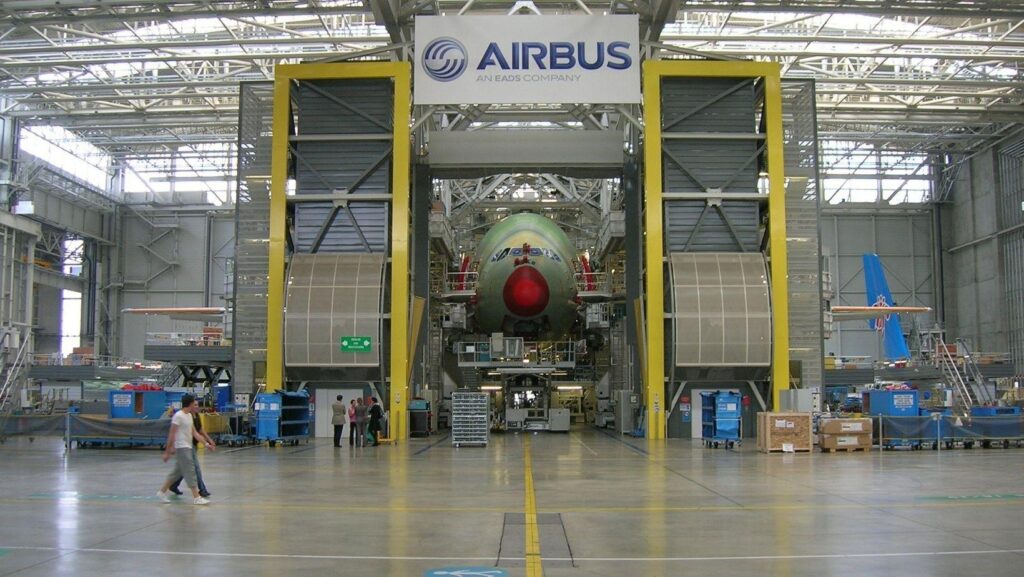
Airbus is a useful way to think about modern product building because it starts with a problem that sounds almost absurd. One aircraft can be designed, built, tested, moved, and assembled across several countries, which helps explain why software development companies in Europe tend to look comfortable with distributed work long before remote delivery became a management fashion.
The company’s commercial aircraft network has long tied together major work in France, Germany, the United Kingdom, and Spain, while large sections travel onward to final assembly lines. That arrangement leaves very little room for vague ownership, missing notes, or “someone will explain it later.” A team like N-iX does not need to build airplanes to learn from that logic. The lesson is simpler than that: when the product is too big for one room, the room has to move into the process.
When the Product Is Split Across Borders
The Airbus story matters because distance changes the kind of mistakes teams make. In a single office, weak coordination can hide for a while. Someone leans over a desk, clears up a detail, and the work keeps moving. Spread that same project across borders, and every fuzzy decision turns into a delay. Therefore, distributed teams learn early that clarity is not decoration. It is part of the build.
That pressure creates habits that look boring from the outside and priceless from the inside: teams write things down, they define who owns what, they treat version history as a source of memory, and they also build routines around check-ins, handoffs, and release readiness so that work can keep moving without a rescue call every afternoon.
Under that kind of pressure, a cross-border product needs a few basics:
- A shared picture of what is being built
- Named owners for each part of the work
- Checkpoints where teams compare what they meant with what they actually shipped
- A way to move decisions into searchable records instead of private chat threads
That list sounds simple because it is simple. The hard part is keeping it alive when the project grows, the schedule tightens, and three teams are waiting on the same answer.
How Europe Turned Cross-Border Work Into a Habit
Europe gives teams a practical education in coordination. Different legal settings, working habits, languages, and client expectations sit close together, so cross-border delivery stops feeling unusual very quickly. A product team may have design in one place, backend work in another, security review somewhere else, and stakeholders in a fourth location. Because of that, many software development companies from the region learn to treat process design as part of engineering, not as paperwork added later.
The best ones also understand that distance is not only about geography but also about role, industry, and decision speed. A mature software development company knows that a product can break apart even when everyone works in the same city if nobody shares the same map of priorities, trade-offs, and definitions. Europe just makes that weakness visible sooner.
This is also why clients looking at cross-border teams should pay attention to habits, not slogans. A polished sales deck says very little. What matters more is whether the team can show how decisions travel, how blockers get exposed, and how knowledge survives staff changes. In that sense, the old European industrial model still has something to teach software: big things stay together when the joins are planned.
How Good Documentation Keeps the Product Together
Once teams stop sharing one office, documentation changes status. It is no longer the thing people promise to clean up later. It becomes the surface where the real work happens. That is why ideas like a shared tool stack matter so much. When code and documentation live closer together, teams catch unclear requirements earlier, keep updates visible, and give testing, design, and delivery people the same base to work from.
Written communication also gets sharper in healthy distributed teams. Instead of relying on memory, they leave behind decision notes, comments, and short status updates that other people can read when they start work. A plane part cannot arrive with half the instructions missing and a promise to “sync later.” Software may look softer because nothing rides through Europe on a cargo aircraft, but the logic is similar. If product context, acceptance rules, or release notes are incomplete, the failure just shows up in a different place.
What This Looks Like in Day-to-Day Software Work
Take a product with engineering in Poland and Ukraine, product leadership in Germany, and clients in the UK. The weak version of that setup fills calendars with status calls because nobody trusts the written trail. The stronger version turns the written trail into the default and uses meetings for conflict, judgment, and choice. That difference is small on day three and huge on month ten.
The strongest software development services in this kind of setup feel steady: questions get answered in the same place each time, handoffs follow a pattern, and priorities are visible. Also, testing starts from written expectations instead of guesswork. Teams like N-iX tend to be judged well when they can make this steadiness visible, because clients are not really buying hours. They are buying fewer surprises.
Airbus also shows why distributed work is not the cheap version of product development. It is a discipline. It asks teams to build trust into the system instead of hoping personal chemistry will carry everything through. However, once that discipline is in place, borders stop looking like cracks in the product and start looking like part of its shape.
Conclusion
Airbus makes one point hard to ignore — when a product must survive many handoffs, the team has to design those handoffs as carefully as the product itself. That pressure produces better notes, clearer ownership, and stronger habits around review and release. For that reason, Europe has become a natural training ground for teams that build across borders. The companies that grow up in that setting are not magically better. They just learn earlier that complex work falls apart when context lives only in people’s heads. When the process carries the context, the product has a much better chance of staying whole.