
A convincing sense of depth starts with the images a viewer receives. Brain Dance’s viewing reference is a useful starting point for exploring stereoscopic VR video, but the recording format still determines what the scene can show. Two views of a room can suggest distance without allowing the viewer to walk around every object in it.
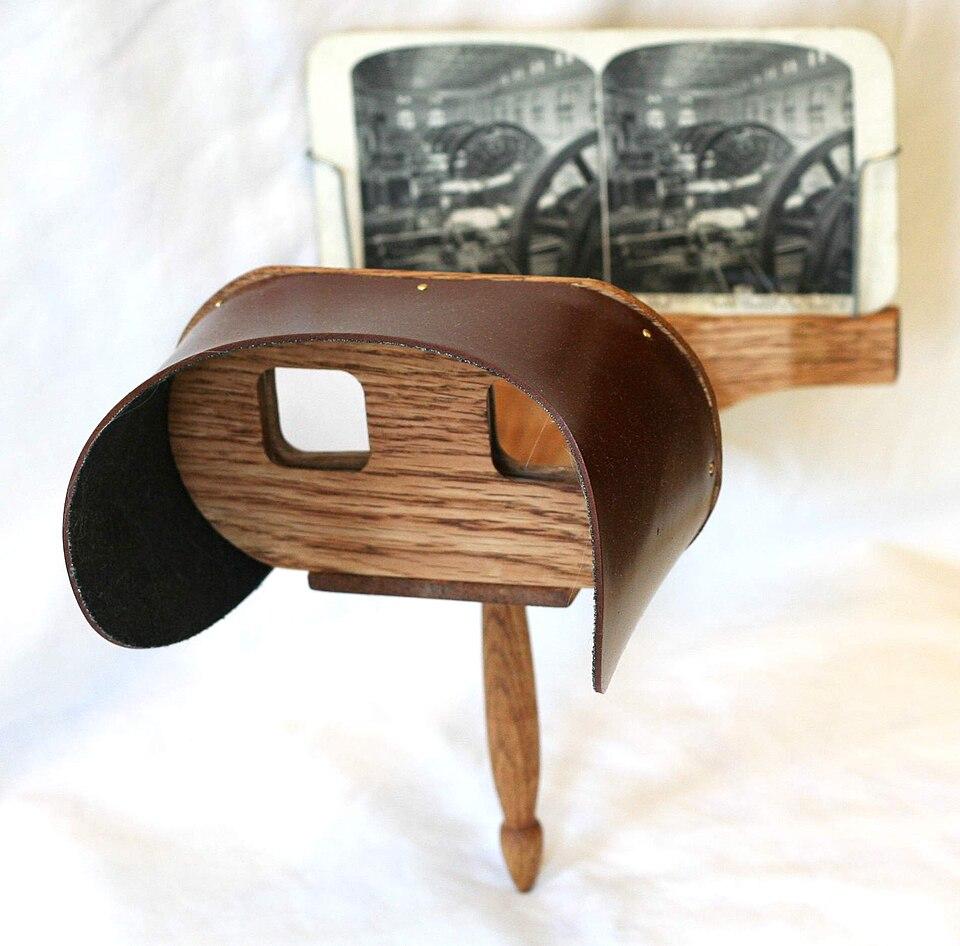
That distinction becomes easier to understand by looking at an older device: the stereoscope. It presents a slightly different photograph to each eye. A headset can use a related principle while also responding to the direction the viewer faces. The result may feel spatial, although the available viewpoints remain constrained by how the content was captured or constructed.
Separate three questions about the scene
First, ask whether the presentation supplies a different view to each eye. This is the stereoscopic part of the experience. Second, ask how much of the surrounding scene was recorded. A 180-degree view and a 360-degree view describe different coverage. Third, ask whether the experience responds to changes in the viewer’s position, rather than only changes in viewing direction.
These questions describe different properties. A panoramic photograph can cover the room around a camera without providing separate eye views. A stereo recording can provide depth over a more limited field of view. A constructed three-dimensional scene can support movement that a pair of recorded images cannot reproduce on its own. Reading these properties separately avoids expecting one feature to guarantee the others.
Notice what happens when you turn
In a spherical recording, turning your head lets you inspect another direction from the recorded viewpoint. Imagine a camera standing in the centre of a workshop. You might turn from a workbench to a doorway, but you are still inspecting the workshop from the camera’s original location.
A useful first test is to choose a stationary object and turn away, then look back. Does it remain in a consistent direction? Does the horizon stay level? If the presentation appears stretched or unexpectedly flat, check the selected projection and stereo layout. An incorrect player setting can obscure the intended geometry before the recording itself has been fairly evaluated.
Leaning asks a different question
When someone leans sideways in a real room, nearby objects shift against the background and previously hidden surfaces may become visible. Reproducing that change requires information about more than one fixed pair of images. A positional tracking system can measure movement, but that does not create missing scene information inside a conventional recording.
Consider a vase partly hiding a book. Looking toward the book changes the direction of attention. Moving around the vase changes which parts of the book can be seen. A format description should make clear which kind of exploration an experience supports. The distinction matters when judging demonstrations of volumetric video, reconstructed scenes or other methods that promise additional viewpoints.
Treat scale as part of the presentation
An object can appear surprisingly large or small when the relationship between capture, playback and viewing position changes. That impression may be an artistic decision, a consequence of the capture arrangement or a setting that needs attention. It should not immediately be treated as a reliable measurement of the real object.
Look for familiar reference points such as a chair, a doorway or a person standing at a clear distance. Compare several moments in the scene rather than drawing a conclusion from one dramatic close-up. If the goal is to communicate dimensions accurately, the creator needs a more explicit method than simply relying on the audience’s feeling of presence.
Describe the effect precisely
Good descriptions help people choose the experience they actually want. A recording can offer a strong sense of depth, a broad field of view or a compelling place to look without supporting free movement through the scene. Those are useful qualities in their own right.
When discussing a demonstration, explain what you could do: turn toward another part of the room, inspect a stereo view, or move to a different position. Note the device and playback mode as well. This language makes an observation repeatable and gives the next viewer a practical expectation before putting on a headset.