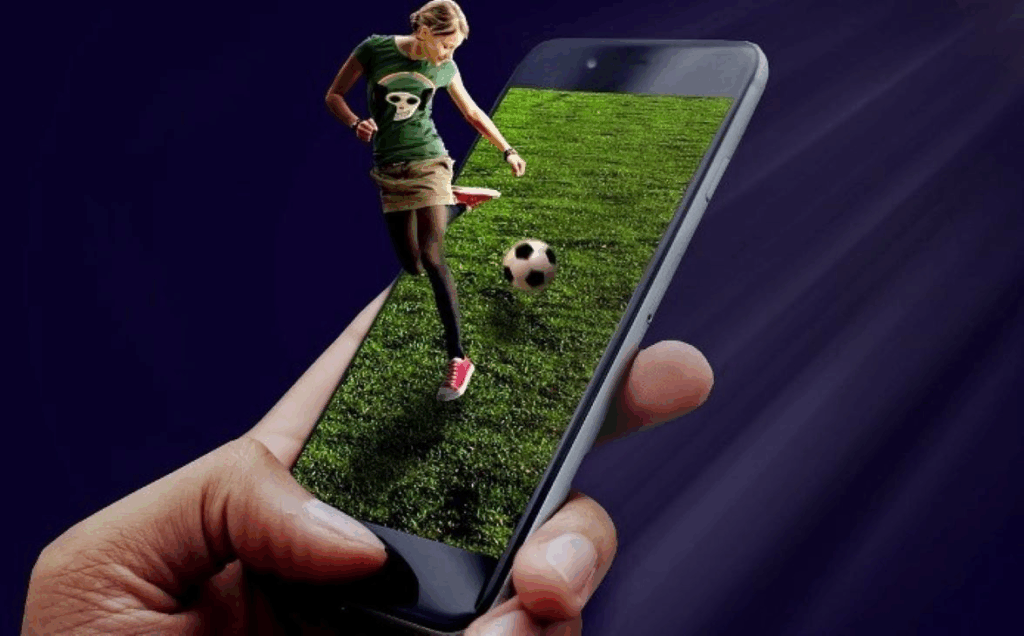

I’ve been tracking this shift for years now, and it’s honestly mind-bending. We’re not just talking about crisper displays or faster loading times—the fundamental relationship between humans and digital environments is being completely rewritten. Extended Reality (XR), AI, and sensory engineering aren’t incremental upgrades. They’re rewiring how we exist in online spaces.
The screen? Used to be a window we looked through.
Now it’s a door we walk through.
I want to break down the actual tech and design principles driving this—neural rendering, haptics, spatial computing—because once you understand these building blocks, you see how the “Metaverse” stopped being vaporware and started becoming something tangible. Something I use, test, and actually spend time in. These tools are systematically hacking human perception in ways that dissolve the boundary between physical and digital until your brain can’t reliably distinguish one from the other. That’s the part that keeps me up at night in the best way.
How Did We Move From Passive Observers to Digital Inhabitants?
The inflection point hit when bandwidth and processing power finally matched ambition. We stopped passively consuming pre-packaged content and started actively inhabiting persistent, real-time worlds. That’s the pivot—transitioning from audience member to participant with genuine agency over outcomes.
Rewind to Web 1.0 and early 2.0. Digital entertainment was fundamentally read-only architecture. You consumed articles, streamed videos, downloaded music—someone else created it, you clicked through it. The interaction layer was paper-thin: scroll, click, occasionally drop a comment. There was always this tangible separation between you physically sitting at your desk and the content existing on the other side of the interface barrier.
Then game engines like Unity and Unreal started powering way more than just games. Film production pipelines, architectural previsualization, real-time broadcast graphics—suddenly the baseline expectation for visual fidelity exploded. People demanded more because they’d personally experienced what was possible when you pushed the tech hard enough.
I’ve personally tested probably sixty-plus platforms over the last decade—everything from janky text-based MUDs to polished modern interactive experiences like Lucky 7—and the trajectory’s remarkably consistent. Each generation delivers richer interaction depth and sharper environmental fidelity. We’ve now arrived at this concept of digital inhabitants: people who genuinely project their sense of self into virtual environments through avatars that carry real emotional weight. It stopped being just a username with an icon attached. It’s you, recognizably you, existing in that space.
This isn’t purely a technological evolution. The shift is deeply psychological. We transitioned from “using the internet as a tool” to “being present in internet-native spaces,” and that fundamental reframing changes absolutely everything about design priorities, social norms, and infrastructure requirements.
What Technologies Are Powering the Next Generation of Immersion?
Three major technology stacks converging simultaneously: Extended Reality (XR) hardware ecosystems, 5G connectivity infrastructure, and AI-driven rendering pipelines. When you combine these three, they systematically eliminate latency and push sensory fidelity to thresholds where your brain genuinely stops questioning whether the experience is “real.” That cognitive friction—those micro-reminders that you’re interacting with a simulation—gets methodically erased layer by layer.
Head-Mounted Displays (HMDs) dominate the press coverage, but they’re honestly just the final delivery mechanism. The real computational muscle lives in the infrastructure stack underneath. Cloud gaming and edge computing architectures mean you no longer need a $3,500 local workstation—photorealistic asset streams pipe directly to lightweight smart glasses or compact headsets. That access democratization matters enormously. If only wealthy early adopters can participate, the ecosystem stays permanently niche and fragmented.
And blockchain tech? It’s gradually solving the digital provenance problem that’s plagued virtual economies since their inception. If you’re architecting a persistent virtual economy where people invest real time and money, they need verifiable ownership of their digital assets. You can’t build a genuinely functional metaverse economy without that authentication and transfer layer in place.
Why Spatial Audio and Haptics Matter More Than Graphics
Spatial audio and haptic feedback accomplish something pure visual fidelity fundamentally cannot: they provide what I call sensory completion. Your eyes deliver contextual information about environment and scale. But your ears and your skin provide the confirmation signal that you’re genuinely present in that space rather than observing it from outside.
Here’s a design mistake I encounter constantly across platforms—teams obsessively optimize for 8K resolution while completely neglecting audio engineering fundamentals. Massive strategic error. The human brain relies intensely on binaural acoustic cues to spatially locate sound sources in three-dimensional space. Spatial audio systems leverage Head-Related Transfer Functions (HRTF) to accurately simulate how sound waves physically interact with the unique geometry of your individual ear structure. This lets you instinctively pinpoint where a specific noise originates: directly above your position, behind and slightly left, two feet to your right at shoulder height.
Haptics technology used to mean crude controller vibration. Not anymore—not even close. Modern haptic suits and glove systems deploy micro-fluidic arrays and precise force feedback mechanisms to simulate texture variation, object mass, physical resistance—actual tactile sensation. I field-tested a haptic glove rig about eighteen months ago and picked up a virtual stone that genuinely conveyed weight distribution and surface roughness. That’s the moment where theory clicked into visceral reality for me.
Without these critical non-visual sensory inputs, even a perfectly photorealistic VR environment feels fundamentally hollow. Like wandering through an abandoned movie set rendered in flawless 4K. Add properly engineered spatial audio and haptic feedback layers? It transforms from impressive technical demo into an actual place where presence feels natural.
The Role of AI and Neural Rendering in Visual Realism
Neural rendering represents a genuine paradigm shift because it deploys AI systems to generate photorealistic imagery from incomplete input data. Traditional CGI rendering calculates light physics ray by ray in brute-force fashion—computationally brutal and hardware-intensive. Neural networks instead “hallucinate” the scene based on learned pattern recognition from massive training datasets, synthesizing complex lighting interactions and fine surface textures in real-time that would’ve been computationally impossible just five years ago.
This is fundamentally restructuring how digital humans and navigable environments get constructed from the ground up. Techniques like Volumetric Capture and NeRF (Neural Radiance Fields) enable AI systems to reconstruct fully explorable 3D spaces from sparse 2D photographic input. It directly addresses the infamous Uncanny Valley problem—those unsettling, almost-but-not-quite-convincing digital avatars that trigger instinctive rejection responses. Instead of manually animating every skin pore and micro-expression, AI systems probabilistically infer how light should realistically scatter across skin subsurface layers or how fabric should naturally fold and drape during complex body movements.
So the next generation of virtual reality experiences won’t just resemble high-budget video games with impressive graphics. They’ll be genuinely indistinguishable from live-action video footage captured in physical space. Except you can freely navigate the environment, manipulate objects, and interact with characters. That’s the threshold we’re crossing right now.
Designing for “Presence”: How Do Creators Hack Human Perception?
Creators systematically trigger presence—that powerful “I’m genuinely here” sensation—by precisely aligning multi-sensory inputs with what your body’s proprioceptive systems instinctively expect based on a lifetime of physical-world experience. When digital interactions mirror actual physical laws with sufficient accuracy, your brain progressively suspends disbelief and stops running constant reality-checking routines. You just… accept it.
Achieving reliable presence requires rigorous Human-Centered Design methodology that explicitly prioritizes cognitive comfort over raw technical specifications on a spec sheet. One framework I’ve seen deliver consistent results is what researchers call the “Perceptual Loop”: action → feedback → sensory confirmation. When you move your hand through space in a Mixed Reality (MR) environment, the system’s response has to manifest within single-digit milliseconds and spatially match exactly where your proprioceptive nervous system reports your hand actually is. Any perceptible lag or positional mismatch? The illusion fractures immediately. Often triggers acute cybersickness symptoms, which I can personally confirm is profoundly unpleasant and lingers for hours.
Creators are essentially systematically hacking your brain’s reality-validation processes by providing continuous, multi-sensory evidence streams that the virtual environment follows consistent physical rules. When all those confirmation signals align correctly, your mind pragmatically accepts the simulation as your current experiential reality because every perceptual check comes back positive.
The Shift to Spatial UI and Natural Interaction
Spatial UI design philosophy fundamentally abandons legacy abstract 2D interface paradigms—keyboards, mice, nested dropdown menus, icon grids—and migrates toward natural human interaction modalities: eye-tracking systems, hand gesture recognition, voice command processing. It systematically removes the abstraction layer that exists between forming intent and executing action.
In mature spatial computing environments, the user interface isn’t artificially pinned to a floating screen panel. It exists diegetically within the world’s spatial logic. Instead of hunting for a “play” button in a menu tree, you physically reach out and pick up a virtual musical instrument. Eye-tracking systems let the platform infer your attention and intent before you execute any overt action, enabling sophisticated optimizations like “foveated rendering” (rendering sharp visual detail exclusively where your gaze focuses) plus interface elements that smoothly activate purely through sustained eye contact.
When this interaction design is executed correctly, the underlying technology stack effectively vanishes from conscious awareness. You’re just naturally… doing things. Zero cognitive friction between thought and outcome.
Beyond Gaming: What Is the Future of Social Co-Presence?
The genuine future of social co-presence architecture involves fully interoperable metaverse platform ecosystems where your persistent digital identity seamlessly travels with you across different virtual spaces and service providers. Virtual concerts and festivals, professional collaborative workspaces, casual social hangout zones—shared experiences you participate in regardless of physical geographic distance or time zone barriers. This evolution extends dramatically beyond traditional multiplayer gaming into basically every aspect of human social interaction.
I’m actively tracking how EntertainTech is emerging as a distinct sector where entertainment content delivery fuses with authentic social connection mechanics at the infrastructure level. Virtual concerts hosted on platforms like Roblox or Fortnite have successfully pulled millions of simultaneous concurrent users who report genuinely feeling crowd energy and shared emotional resonance despite being physically isolated in their individual bedrooms. That’s not marketing hype or a temporary novelty gimmick—it represents a fundamental shift in how humans coordinate collective gathering experiences.
The concept of Digital Twins originally emerged from industrial applications (simulating factories, logistics networks, infrastructure systems). Now it’s rapidly expanding into personal identity representation. You embody and maintain a consistent recognizable persona across multiple platforms and contexts, and that biographical continuity carries genuine social weight. The long-term endgame is architecting a persistent, universally-accessible shared reality layer where co-presence with other humans feels as effortlessly natural as sitting directly across from a friend at a neighborhood coffee shop.
We’re actively constructing a functionally global society connected not merely by information flow and communication channels, but by genuinely lived shared experience that carries emotional weight and forms lasting memory. And honestly? Based on what I’m testing and observing in private betas right now, I think we’re considerably closer to that threshold than most people currently realize.